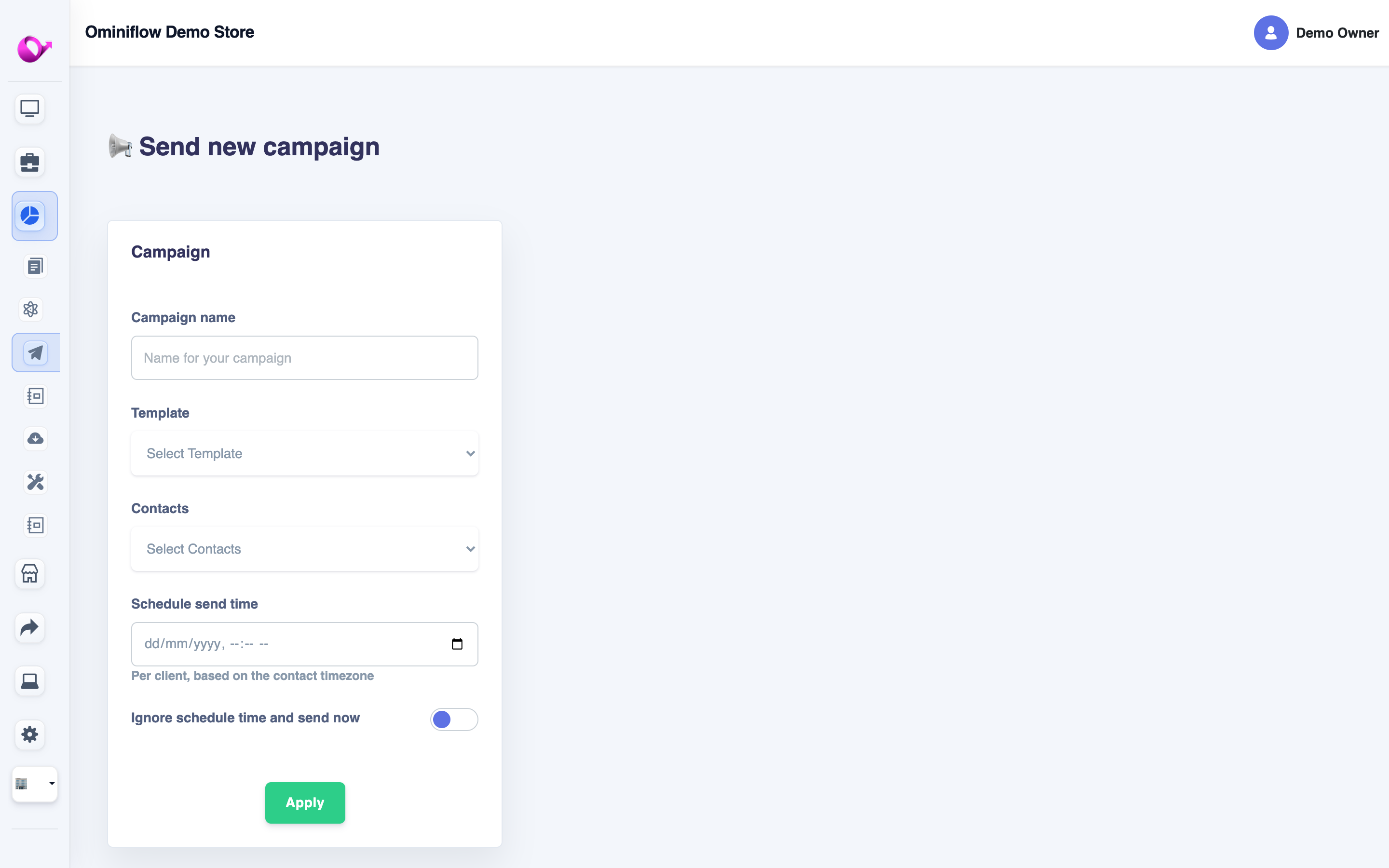
What is WhatsApp marketing software?
A practical 2026 buyer's guide for WhatsApp marketing software — covering Cloud API compliance, campaign segmentation, CTWA ad funnels, deliverability KPIs, vendor red flags, and how to shortlist platforms in one week. A platform to run compliant promotional WhatsApp campaigns using approved Marketing templates, opt-in lists, segmentation, and analytics on the official Business API.
Last updated: 24 June 2026
Quick answer: WhatsApp marketing software in 2026 must run on the official Cloud API with opt-in management, approved Marketing templates, audience segmentation, click tracking, CRM attribution, and quality-rating alerts — not grey-market bulk panels that risk number bans. The best platforms combine broadcast campaigns, chatbot nurture, and commerce triggers (Shopify cart recovery, COD verify) in one workspace.
Marketing leaders evaluating WhatsApp often compare WATI, AiSensy, Interakt, and Ominiflow on broadcast volume alone. That misses half the decision: template category governance, Meta fee transparency, CRM sync depth, and whether your team can launch a compliant pilot in days instead of waiting on engineering. This guide gives you a scored checklist, KPI benchmarks, vendor comparison table, and a one-week evaluation playbook.
12-point buyer's checklist
Score every vendor 0–2 on each item before signing. Anything below 18/24 usually means hidden engineering work or compliance risk later.
- Official Cloud API access — Meta-verified BSP, not unofficial bulk panels
- Template category workflow — Marketing vs Utility vs Authentication guardrails at submission
- Opt-in capture + suppression — STOP keyword handling, consent timestamps, DPDP-aware logging
- Audience segmentation — tags, RFM cohorts, CRM stage, Shopify purchase history
- CTWA ad → WhatsApp funnel — Click-to-WhatsApp audience sync and attribution
- A/B testing — template copy variants with read/click comparison
- Deliverability monitoring — quality rating, block rate, and frequency cap alerts
- Commerce integrations — Shopify, WooCommerce, Razorpay event triggers
- CRM bi-directional sync — Zoho, HubSpot, Salesforce campaign logging
- Meta fee transparency — pass-through at published rates vs BSP markup
- Multi-brand workspaces — for agencies managing multiple WABAs
- Migration support — template and contact transfer from incumbent vendor
Vendor comparison for marketing teams
| Platform | Marketing strength | CRM depth | Meta pricing | Best for |
|---|---|---|---|---|
| Ominiflow | Segmented broadcasts + branching nurture | Native Zoho, HubSpot, Salesforce | At cost — no markup | D2C + CRM-led marketing |
| AiSensy | High-volume promos, template library | Basic export/import | Varies by plan | Broadcast-first India SMB |
| WATI | Campaign manager, basic segments | Zapier-heavy | Often marked up | Simple campaign teams |
| Interakt | Shopify D2C segments | Limited pipeline sync | Plan-dependent | Shopify-only D2C |
| Grey-market panels | Fake "unlimited" sends | None | Opaque | Avoid — ban risk |
Marketing KPIs and benchmarks
Track these weekly during pilot and monthly at scale. Benchmarks vary by industry — D2C fashion typically sees higher read rates than B2B SaaS.
| KPI | Healthy range | What to investigate if low |
|---|---|---|
| Delivery rate | > 95% | Invalid numbers, quality rating drop, template rejection |
| Read rate | 70–90% | Poor send timing, audience fatigue, weak subject line |
| CTA click rate | 8–25% | Weak offer, broken deep link, wrong segment |
| Revenue per broadcast | Track vs email/SMS | Missing UTM or Shopify attribution |
| Opt-out rate | < 2% | Over-messaging, cold lists, wrong category |
| Quality rating | Green / High | Block spikes, miscategorized templates |
Core marketing workflows to validate in demo
- Launch blast — VIP segment, product image + CTA button, delivery/read/click report
- Cart recovery — Shopify abandon trigger at 1h and 24h with Utility or Marketing template
- Lead nurture — CTWA ad lead → bot qualifies → CRM owner assigned → Day 2/5 follow-up sequence
- Win-back — 30/60/90-day lapsed buyers with personalized offer
- Event RSVP — webinar or store opening with reminder Utility templates
How to model marketing software TCO
WhatsApp marketing cost has three layers: platform subscription, Meta per-conversation fees (Marketing ≈ ₹0.86 in India), and operational cost (creative, list hygiene). A D2C brand sending 10,000 marketing conversations monthly might spend ₹8,600 Meta + ₹2k–10k platform. Vendors that markup Meta 15–30% add ₹1,290–₹2,580 silently.
Deep dive: Marketing cost per message India · Broadcast software comparison · Ominiflow pricing
Vendor red flags
- Cannot confirm official Cloud API / BSP status in writing
- Refuses to disclose Meta pass-through vs markup
- Charges per contact instead of transparent usage model
- No template category guidance — encourages Marketing for transactional sends
- Broadcast-only UI with no CRM or commerce event triggers
- No quality-rating or block-rate monitoring dashboard
One-week evaluation playbook
- Document monthly volume by template category (marketing, utility, authentication)
- Request written Meta pass-through confirmation from two finalists
- Submit a test Marketing template and measure approval turnaround
- Import 200 opted-in contacts and run a 50-contact pilot broadcast
- Validate CRM sync — confirm campaign logs on a real lead record
- Compare automation vendors on branching depth and handoff
- Review comparison hub for your incumbent alternative
Resources: Ominiflow marketing solutions · D2C campaign software · AiSensy alternative · All comparisons · Start free trial
FAQ
What is WhatsApp marketing software? expand_more
A platform to run compliant promotional WhatsApp campaigns using approved Marketing templates, opt-in lists, segmentation, and analytics on the official Business API — distinct from the free WhatsApp Business App which cannot broadcast at scale.
How is WhatsApp marketing software different from SMS blast tools? expand_more
WhatsApp requires Meta-approved templates, explicit opt-in, and per-conversation billing by category. SMS has different regulations and typically lower engagement. Marketing software manages template lifecycle and quality rating — not just message pipes.
Which WhatsApp marketing software is best for India D2C? expand_more
Teams needing Shopify cart recovery, COD verify, Zoho CRM sync, and zero Meta markup typically shortlist Ominiflow and Interakt. Choose based on CRM depth and multi-brand needs, not broadcast UI alone.
Can I run WhatsApp marketing without developers? expand_more
Yes. Platforms like Ominiflow provide no-code campaign builders, template submission, and CRM connectors — go-live in 5–7 business days typical. See no-code Cloud API setup.