What is WhatsApp messaging orchestration?
WhatsApp messaging orchestration means running marketing, authentication, order updates, and live support in one persistent Cloud API thread — with CRM context and one operating model — instead of an isolated chatbot. Meta and BCG’s 2026 Leading in the Age of Messaging study (533 leaders, 10 markets) found 92% of U.S. enterprises already use AI in direct messaging, but full-lifecycle programs were associated with up to 2× CLV and CAC improvement versus single-use-case teams. The U.S. write-up also cites 25–30% higher verification success, 15–20% CSAT/NPS from real-time support, and 20–25% higher engagement from fulfillment updates (self-reported; not a guarantee). Run the same pattern on Ominiflow Revenue OS: Acquire → Qualify → Sell → Collect → Support → Retain on one number, Meta fees at cost, typical go-live 5–7 business days with complete documents.
Last updated: 2 September 2026
92% of U.S. enterprises surveyed already use AI in direct customer messaging. The ones pulling ahead are not running a smarter chatbot in isolation. They connect marketing, authentication, order updates, and live support into one continuous thread — so every useful message makes the next one more likely to be read.
That is the finding from Meta and Boston Consulting Group's 2026 Leading in the Age of Messaging study (533 business leaders, 10 markets). Enterprises that deploy messaging across the full customer lifecycle report up to 2× improvement in customer lifetime value and customer acquisition cost versus teams stuck on a single use case.
This playbook keeps that WhatsApp Business Platform research intact — then shows how to run the same orchestration on the official Cloud API with Ominiflow: one number, one inbox, one contact record from OTP through repeat purchase.
Primary source: U.S. customer engagement trends on WhatsApp for Business (3 August 2026). Study: Leading in the Age of Messaging, Meta and BCG. Survey results are self-reported by large enterprises; individual results differ.
92%
of U.S. enterprises already use AI in direct customer messaging
2×
CLV improvement when messaging covers the full lifecycle
2×
CAC improvement vs isolated, single-use-case programs
Too long? Start here
- AI in the thread is table stakes. Orchestration — one persistent conversation across auth, orders, support, and marketing — is what compounds
- U.S. teams usually start with promos. The research says the biggest gains sit in the messages customers actually need: OTP, delivery, real-time support
- Trust first, then sell: authentication +15–30% verification success; support +15–20% CSAT/NPS; fulfillment +20–25% engagement (Meta/BCG, U.S. write-up)
- Five capabilities: strategy with consent, AI-ready data, one operating model, a tight partner stack, and outcome metrics (CLV/CAC) — not open-rate vanity
- Do it on Ominiflow: Revenue OS (Acquire → Qualify → Sell → Collect → Support → Retain) on one Cloud API number · start free
Why AI in messaging still underperforms
Buying an AI agent and parking it on a broadcast list is how most U.S. programs start. It is a reasonable entry point. It is also why results stall: the model has no order context, the promo lands in a thread the customer never trusted, and support still lives in email.
Diagnose against these four gaps before you add another model.
Promo-only thread
The channel is trained as advertising. Customers mute it. Later marketing reads lower because nothing useful ever arrived in that chat.
AI without systems
The bot can chat. It cannot look up Shopify, confirm COD, or pass the same ticket to a human. Agentic language without CRM is a demo.
Split ownership
Marketing owns broadcasts. Support owns the inbox. IT owns the BSP. Nobody owns the thread, so context dies at every handoff.
Wrong scoreboard
Teams celebrate delivery rate and bot containment. The Meta/BCG leaders track CLV, CAC, CSAT, and verification success across the lifecycle.
Full-lifecycle messaging is what compounds
U.S. companies tend to start with promotional campaigns. The research shows the largest gains when the same channel also handles the interactions customers value most: order updates and delivery alerts, account verification, and real-time support.
Those touchpoints teach the customer that the thread is worth opening. Engagement with later marketing can rise because the number already delivered something they needed. James Detmer, Meta Director of Product Management, put it this way: it is not about being the only channel — it is about a high-trust space where the important interactions stay in one continuous thread, without losing context.
25–30%
higher verification success when messaging handles authentication
15–20%
CSAT and NPS improvement from real-time messaging support
20–25%
higher engagement from fulfillment and transaction updates
U.S. write-up of 2026 Leading in the Age of Messaging, Meta and BCG, as published by WhatsApp for Business. Self-reported enterprise survey; not a guarantee of Ominiflow customer results.
| WhatsApp category | What customers get | What to run on Ominiflow |
|---|---|---|
| Authentication | Login OTP, payment confirm, account verify | WhatsApp OTP with copy-code templates; India rate pass-through — see WhatsApp vs SMS. Meta story: Banco Inter vs SMS |
| Utility | Order packed, out for delivery, COD confirm | Shopify/WooCommerce events → approved utility templates; COD confirmation |
| Service | Where-is-my-order, returns, live agent | AI node + shared inbox handoff with full history |
| Marketing | Drops, win-back, VIP early access | CRM segments and a short path to buy — marketing message playbook |
When those four categories share one persistent WhatsApp thread, each message reinforces the next. That is the compounding effect behind the 2× outcomes in high-adoption markets — the same pattern Indian D2C teams already see when COD and shipping alerts land before the festival campaign.
The five capabilities the research says to build
The U.S. market report (and the parallel country editions) names five capabilities. Map them to a platform you can actually operate — not a four-vendor pile.
Holistic strategy with consent. Match use case to segment. Marketing needs documented opt-in; utility and authentication follow customer expectation. One number, clear STOP handling.
AI-ready data and tech. CRM, store, and payment events have to reach the thread in real time. Visual flows + webhooks beat a chatbot that cannot see the order.
One operating model. Marketing, support, and ops share the inbox and the contact. Collision detection so two agents do not reply to the same chat.
A tight partner stack. The study finds enterprises lean on several vendors (BSP, AI, CRM, CPaaS). Unclear roles slow you down. Prefer one WhatsApp layer that already includes inbox, templates, and AI.
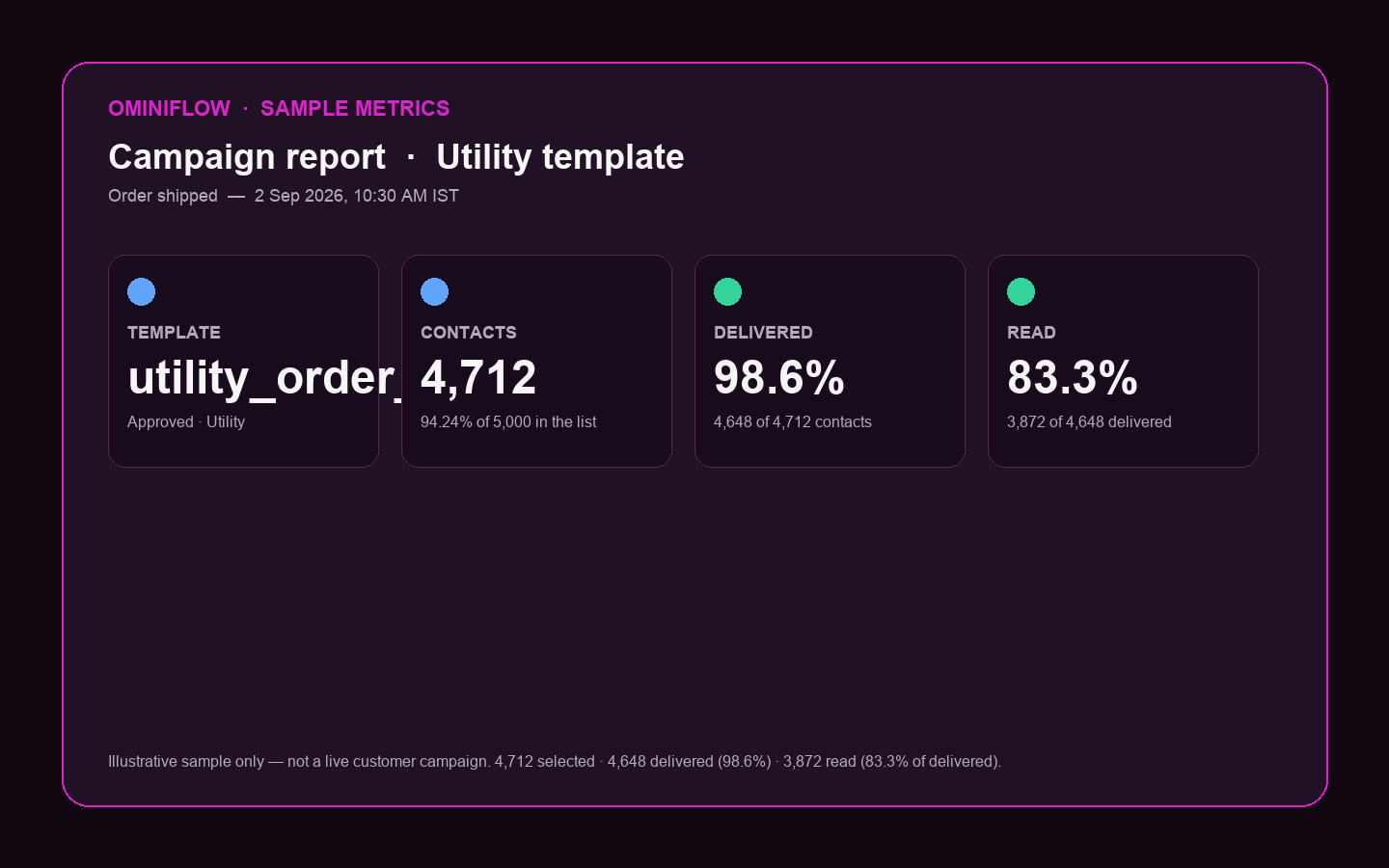
Value-based measurement. Score CLV, CAC, CSAT, verification success, and RTO — not only delivered/read. Campaign reports should sit next to support metrics.
BCG's implementation split is the useful punchline: roughly 10% AI, 20% data and tech, 70% operating model. If your budget is inverted — model first, inbox last — you will look like the 92% who “use AI” and none of the cohort that reports 2× outcomes.
How to apply this on WhatsApp Business API
1. Put useful messages in the thread before the promo
Stand up authentication and utility first. A login OTP or “your order shipped” template trains the customer to open you. Then marketing inherits that trust. On Ominiflow, submit Authentication and Utility templates in the same library as Marketing — do not run promos from a separate unofficial number.
- Week 1–2: OTP + order/COD templates, green quality rating
- Week 3: AI FAQ + human handoff on WISMO and returns
- Week 4+: segmented marketing to the 90-day engaged list only
Related: quality rating guide · store broadcasts and follow-ups.
2. Keep context in one thread — including the AI
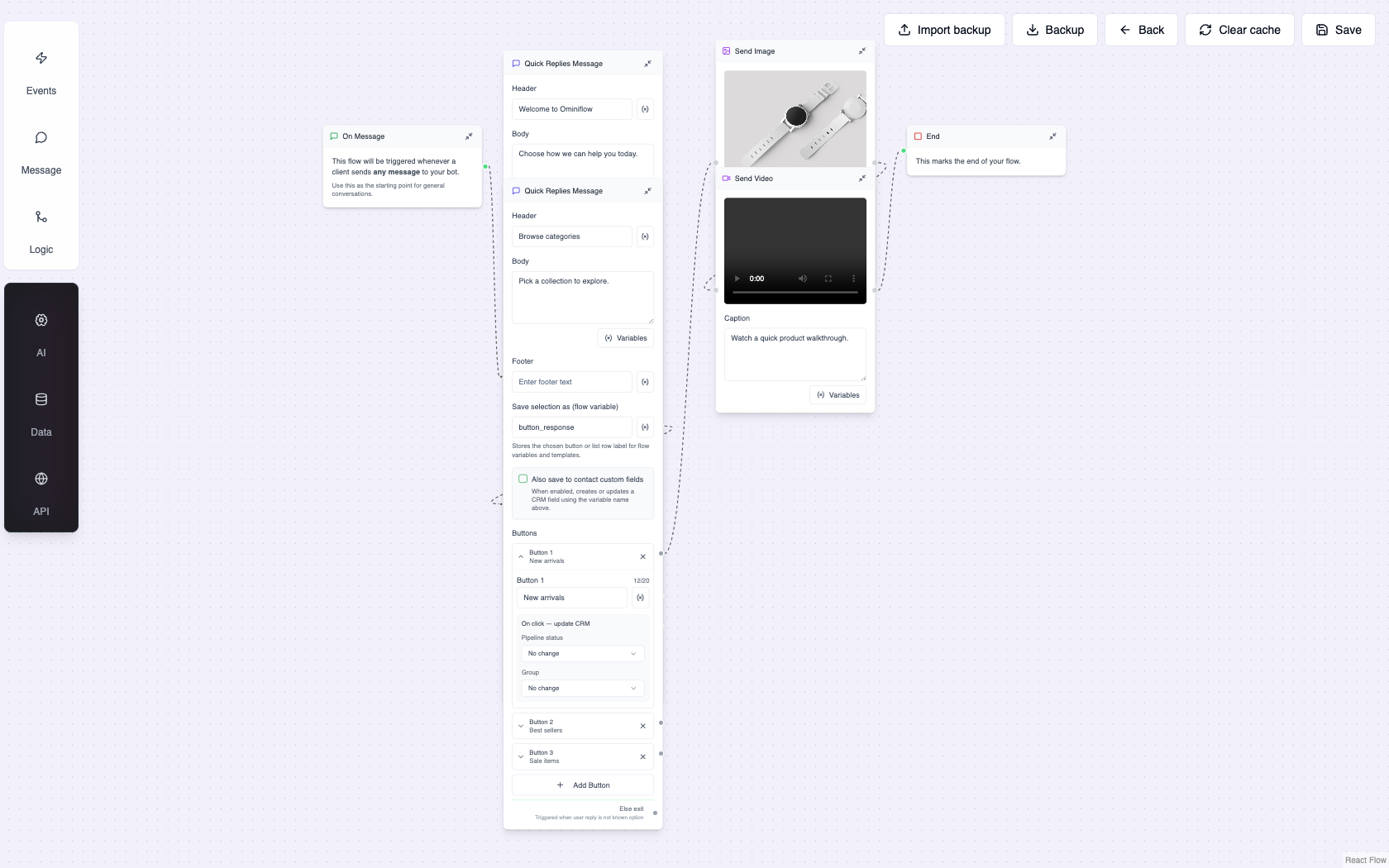
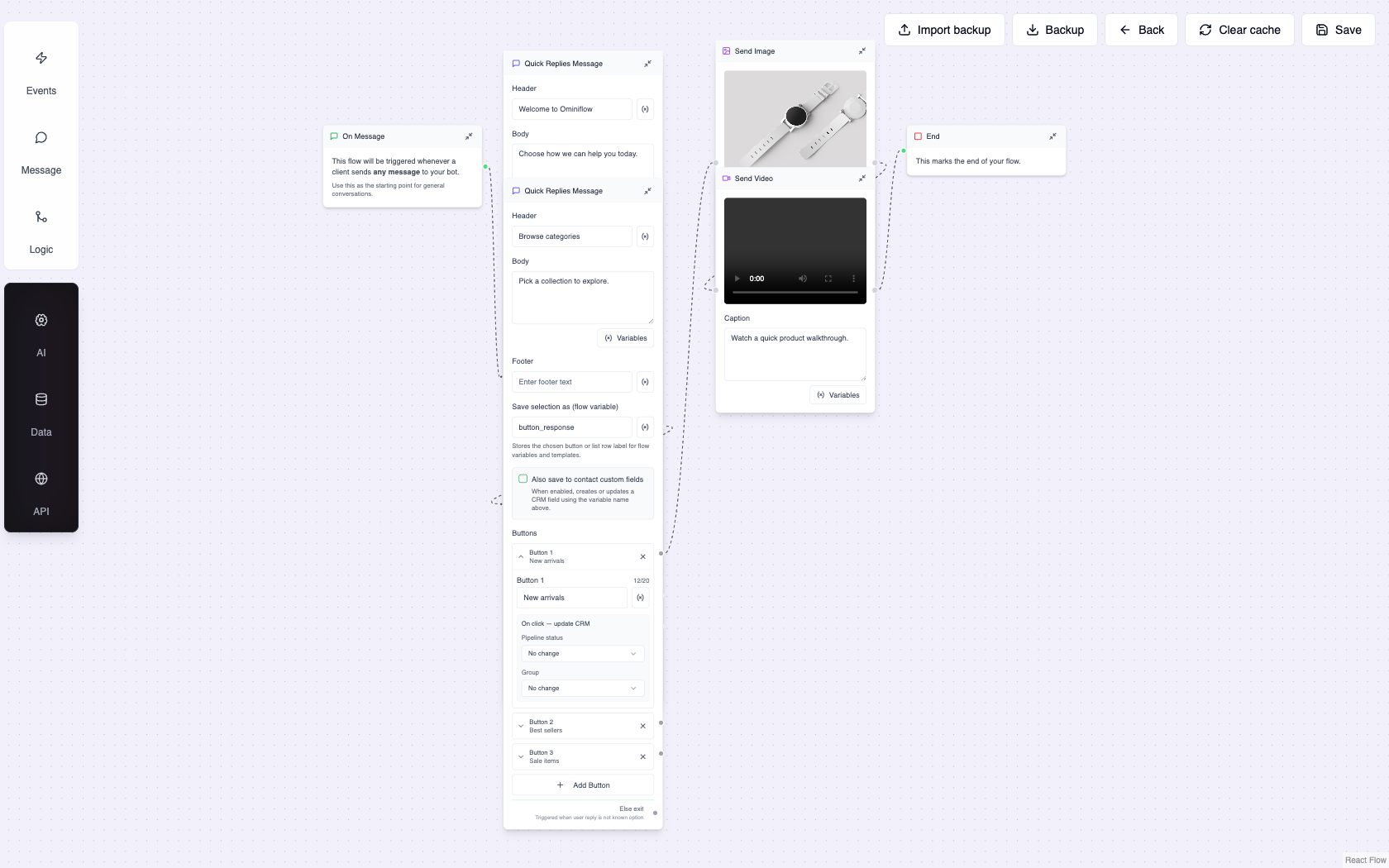
Persistent, context-rich threads get more valuable as agentic AI scales. The model needs the same Shopify order, Zoho stage, and last agent note that a human would. Route inbound to an AI node for patterned intents; escalate with full history when confidence drops. That is the hybrid the conversational AI support guide describes — not a second bot on a second number.
3. Verify the business, then use structured flows
Detmer's third point in the study conversation: verified business identity and structured flows are trust infrastructure. Display name + official Cloud API beats a shared personal phone. Use list messages, buttons, and WhatsApp Flows for payments, appointments, and lead capture so the customer never leaves the thread to re-type data you already have.
Blue-tick path: WhatsApp Blue Tick. No-code bot: store chatbot setup.
4. Connect CRM so orchestration is not a spreadsheet
Holistic strategy fails if segments live in a CSV. Native Zoho, HubSpot, Salesforce, or Shopify sync lets utility events and marketing lists share the same phone number. Stage-change templates (qualified → payment link, shipped → tracking) are the “operating model” the 70% is about — not another LLM prompt.
Setup: CRM integration without developers.
5. Measure the lifecycle, not the blast
Replace “messages sent” as the north-star. For each stage, pick one outcome:
| Stage (Revenue OS) | Outcome to watch | Default Ominiflow motion |
|---|---|---|
| Acquire / Qualify | Lead-to-conversation time, qualified rate | Click-to-WhatsApp ads + AI qualifier |
| Sell | Revenue per send, cart recovery rate | Catalog, pay link, abandoned-cart utility/marketing split |
| Collect | COD confirm rate, RTO | YES/NO confirm before dispatch |
| Support | CSAT, first response, containment | AI + shared inbox |
| Retain | Repeat 90-day purchase, block rate <1% | Win-back and VIP drops on the trusted thread |
US buyers: TCPA-style opt-in still applies on WhatsApp marketing — see WhatsApp Business API for USA. India D2C: the same orchestration is how you cut RTO and still run festival campaigns without burning quality.
How this maps to Ominiflow
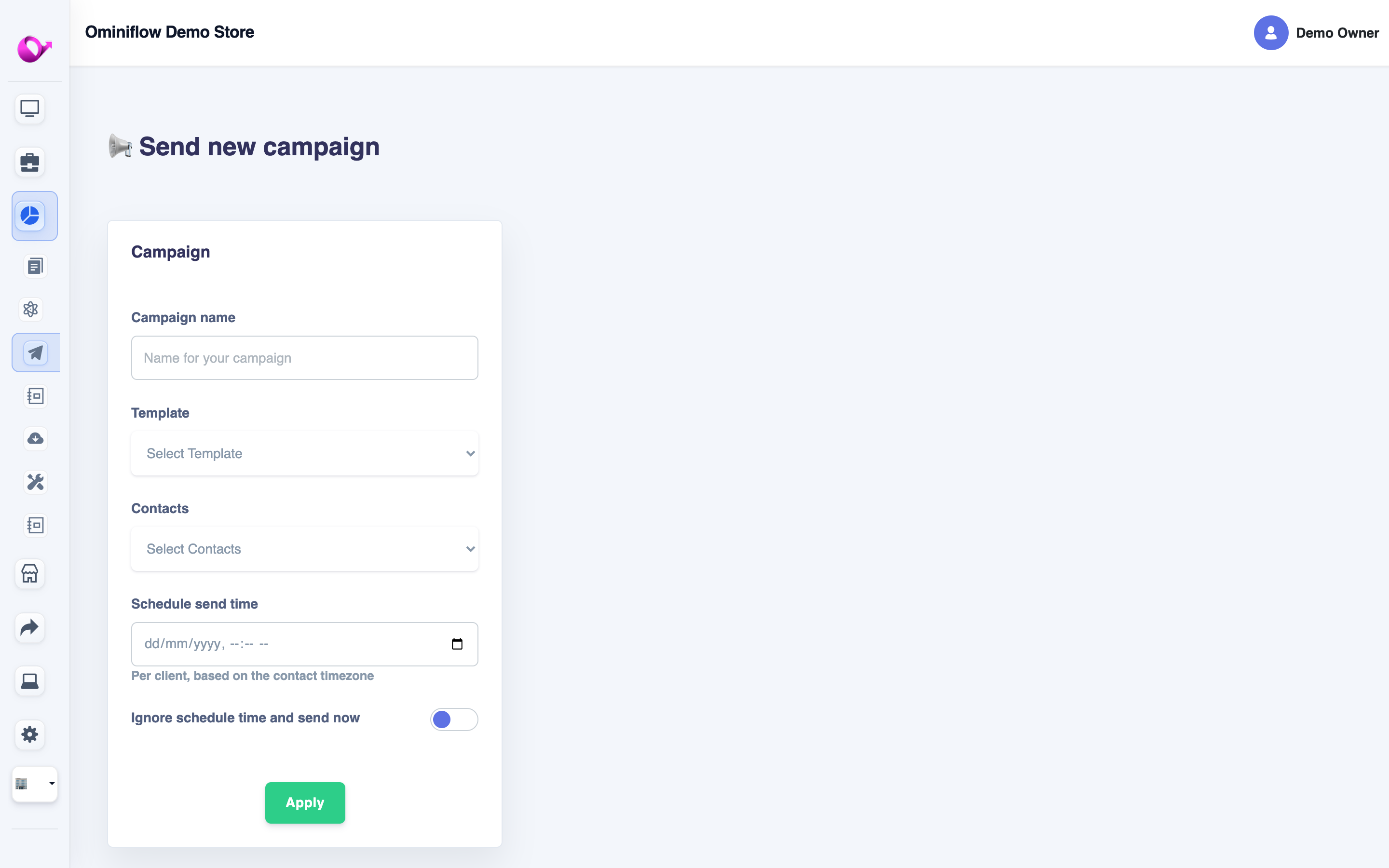
Ominiflow is the WhatsApp Cloud API layer for that stack: template approval, CRM segments, AI flows, team inbox, and campaign analytics on one official number. Meta conversation fees pass at cost. AI agents are part of the WhatsApp Revenue OS — Acquire → Qualify → Sell → Collect → Support → Retain — not a separate CPaaS plus a separate bot vendor plus a separate inbox.
What high-performing teams do differently
The Meta/BCG conversation (Lucas Frenay, BCG; James Detmer, Meta) repeats three operator habits:
- Connect interactions across channels so WhatsApp is the high-trust room, not a silo next to email and SMS
- Keep the thread persistent so agentic AI inherits context instead of restarting every session
- Lead with identity and structure — verified business, Flows, templates — so customers believe the OTP and the order update
Indian mid-market teams often already run utility-first (COD, shipping, OTP) and under-invest in the AI + inbox operating model. U.S. teams often already have AI pilots and under-invest in utility. Both close the same gap: orchestration on official Cloud API. Named-brand versions of that pattern: Meta’s 119 success stories (Magalu, Domino’s Indonesia, PolicyBazaar — attributed, not Ominiflow results).
If you are still choosing between an AI toolkit and a WhatsApp platform, read enterprise AI agents on WhatsApp. Toolkits leave the 70% (inbox, CRM, quality rating, governance) for you to assemble. Meta’s Business Agent announcement is the same split: a 24/7 model is not a substitute for Cloud API operations. IDC’s channel map: agentic commerce on WhatsApp.
Start the lifecycle on Ominiflow
You do not need a 10-market enterprise survey to copy the pattern. Pick one high-trust use case this week (OTP, COD, or WISMO), keep it on the same number you will later use for marketing, and add AI only where it can see the order.
- Connect Cloud API + Shopify/Zoho in days, not a six-month SI project
- Approve Authentication, Utility, and Marketing templates in one library
- AI qualification and support with human handoff in the shared inbox
- Campaign analytics next to conversation quality — pause marketing if block rate crosses 1%
WhatsApp Revenue OS · AI agents · Support · Book a demo
FAQ
What is WhatsApp messaging orchestration? expand_more
Orchestration means running marketing, authentication, order updates, and live support in one persistent WhatsApp thread — with CRM context and a single operating model — instead of isolated AI or broadcast tools. Meta and BCG found this full-lifecycle pattern associated with up to 2× CLV and CAC improvement versus single-use-case programs.
Why isn't AI enough for WhatsApp customer engagement? expand_more
92% of surveyed U.S. enterprises already use AI in direct messaging. The gap is connecting those replies to orders, OTP, and support so the customer stays in one high-trust thread. BCG's split is roughly 10% AI, 20% data/tech, and 70% operating model.
What results did Meta and BCG report for full-lifecycle messaging? expand_more
The 2026 Leading in the Age of Messaging study (533 leaders, 10 markets) reported up to 2× CLV and CAC improvement for enterprises using messaging across the lifecycle. The U.S. write-up also cites 25–30% higher verification success, 15–20% CSAT/NPS from real-time support, and 20–25% higher engagement from fulfillment updates. Results are self-reported and not a guarantee.
Should U.S. and Indian teams start with marketing or utility? expand_more
The research says U.S. companies often start with promos, but the compounding gains come from authentication, fulfillment, and support first. Indian D2C brands usually already have COD and shipping on WhatsApp — they should keep that thread and add AI + inbox + opted-in marketing on the same Cloud API number.
How do I run this on Ominiflow? expand_more
Use official WhatsApp Cloud API: shared inbox, CRM sync, visual AI flows, and approved templates for Authentication, Utility, Service, and Marketing. Meta fees pass at cost. Typical go-live is 5–7 business days with complete Business Manager documents.